

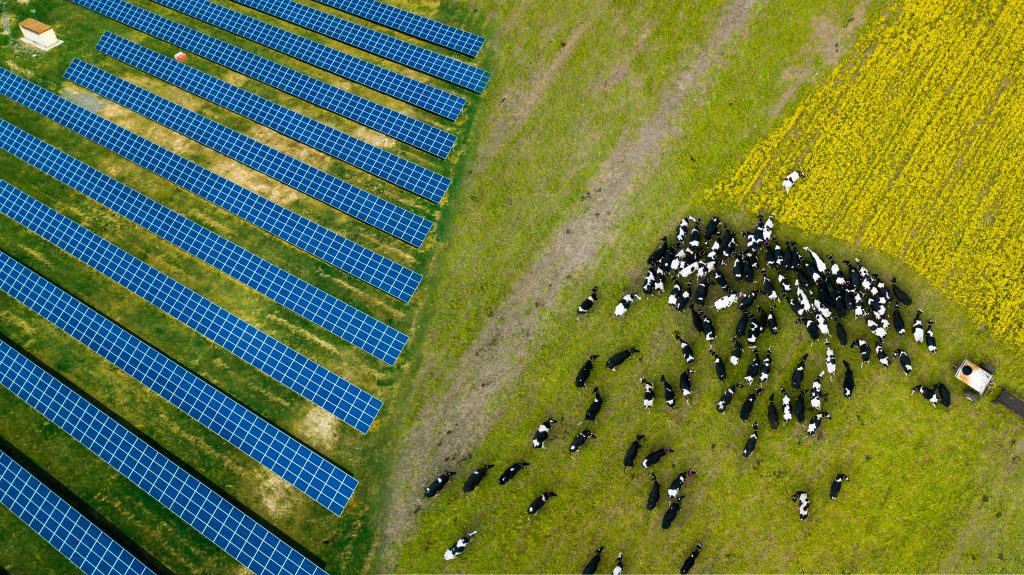
On-grid power generation doubling by 2025
Ireland set to become net exporter if offshore wind ambition reached
Key Findings
- Ireland’s Energy Transition at a Crossroads: Report outlines opportunities and challenges ahead with “ambitious goals and commitments lagging in action”
- Ireland’s energy transition hinges on renewables and electrification
- Renewables on track to contribute 80% of generated electricity by 2030 and 93% by 2050
- EV adoption on course to meet 2025 goals but falls short of 2030 targets by 35%
- Heat pump adoption trails 2030 target by 461,000 units
- Ireland could become a net exporter of electricity, enabled by offshore wind and new interconnectors, by 2030
Pinergy in collaboration with Wood Mackenzie, the global insight business for renewables, energy and natural resources, forecast that electricity demand is projected to grow by two thirds with on-grid power generation doubling by 2050. Data centres are set to account for more than one fifth of all power demand by 2030. The ‘Energy Transition Outlook: Ireland’ report launched today, tracks Ireland’s performance on the energy transition journey and highlights the critical role that renewables and electrification must play in the country’s energy transformation.
The report warns however that current progress is insufficient to meet key energy targets and action is now required to address the widening investment and delivery gaps. As Ireland works to reduce its reliance on fossil fuels, the country must shift to an energy system powered by low-carbon energy sources in order to progress towards legally binding net zero targets set for 2050.
“Ireland’s energy transition is at a crossroads and we must invest in our future,” said Enda Gunnell, CEO at Pinergy. “We’ve set ambitious goals and commitments, but this report makes it clear we must move from aspiration to urgent, tangible action. The time for deliberation is over. We welcome the planned €3.5bn investment announced in the revised National Development Plan, earmarked for Ireland’s electricity grid infrastructure. This funding will be critical in order to make the necessary infrastructure investments now required.”
He continued: “A successful energy transition will not only reduce our carbon emissions and protect our environment, but it will also create new jobs, boost our economy, and enhance our energy security”.
Key Findings:
- Electricity Demand Surge: By 2050, electricity demand is set to grow by two thirds, reaching 59 TWh. This will be driven in the short term by the needs of data centres. In the long term, electricity demand growth will be fuelled by changing consumer behaviour towards low-carbon choices, particularly through EV adoption and electrification of heating systems in residential and commercial buildings.
- Data Centre Impact: Data centres are projected to consume 8.6 TWh of electricity from the grid by 2030, accelerated by the demands and use of artificial intelligence. This energy consumption is equivalent to powering two million homes, placing significant strain on the grid. However, as the grid capacity increases and the electrification of heat & transport intensifies, the share of total power demand for data centres is expected to fall to 16% by 2050.
- Renewable Electricity Success: Renewables are on track but at risk following delays to capacity buildout. The ‘Energy Transition Outlook – Ireland’ report forecasts a contribution of 80% of generated electricity by 2030, climbing to 93% by 2050, with wind alone accounting for 77%. This progress will be enabled by a forecasted 56% increase in onshore wind supply and a 166% rise in solar power supply compared to current levels.
- Offshore Wind Shortfall: Ireland is projected to fall 4GW short of its 5GW offshore wind target by 2030 as projects suffer delays and cancellations.
- EV and Heat Pump Adoption Lagging: While EV adoption is on course to meet 2025 goals, Ireland is falling short of 2030 EV targets by 35%. In order to meet our EV targets, this report predicts we need to accelerate our adoption rate by Heat pump adoption is 68% behind 2030 targets, equivalent to 461,000 units, and lagging other European countries.
- Ireland Becomes Net Exporter Of Electricity: Assuming offshore wind delivery and planned new interconnectors, Ireland has potential to become a net exporter of electricity by 2030.
- Benchmarking Against Other Countries: While Ireland is placed 20th for renewables in electricity among the most advanced economies, it is expected to move to 11th place overall in 2030. However, without adjustments for delays in offshore wind projects, original predictions had placed Ireland in 8th place in this ranking. Denmark leads the way on the top of the leaderboard, achieving 100% renewables by 2030, due to an aggressive climate strategy and greater investment in renewables.
The report emphasises that Ireland’s energy transition is unstoppable but its success hinges on renewables and the rapid expansion of electrification, especially in transport and heating.
“This decade is pivotal to the energy transition and results rather than ambition alone will be the measure of success,” said Lindsey Entwistle, senior analyst at Wood Mackenzie.
“Globally, geopolitical turmoil is creating headwinds for the energy transition. Costs have risen and uncertainty has increased across energy supply chains. Domestically, the sluggish adoption of critical technologies such as electric vehicles and heat pumps risks delaying the transition over the next decade.”
Urgent Actions Needed To Get Back On Track:
The report recommends the following actions:
- Accelerated Grid Infrastructure Upgrades & Energy Storage: Overcoming bottlenecks, deploying the latest energy storage solutions for flexible power supply and streamlining permits to unlock the full potential of renewable energy.
- Increased Renewable Energy Deployment: Addressing supply chain instability, port infrastructure limitations, and planning uncertainty to get offshore wind projects back on track.
- Enhanced Support For EVs & Heat Pumps: Removing barriers to EV adoption and increasing support for heat pumps through effective national awareness and grant incentive campaigns.
- Deployment Of Energy Storage At Scale: To support variable renewables, 4.7 GW of storage should be installed by 2030, more than doubling capacity in the next five years, from 2.2 GW expected by the end of 2025. Efforts must be made to scale up energy storage to support peak power demand and reduce renewable curtailment.
Pinergy’s Gunnell added: “A modern, agile electricity grid is the very foundation of a successful energy transition. Without a robust and adaptable grid, Ireland cannot grow its economy and effectively integrate the increasing volumes of renewable energy that will power the country’s future.
“The domestic economy is currently very vulnerable due to issues with the national grid, with demand set to grow significantly for electricity in the coming years. Ireland’s energy grid is ageing and needs significant resources, urgent investment and deliverable actions to meet the demands and opportunities that come with the energy transition, he said.”
MEDIA QUERIES: pressoffice@pinergy.ie
About the Energy Transition Outlook Report
Wood Mackenzie’s Energy Transition Service and Tool leverages its entire commodity analysis platform to deliver integrated energy market research underpinned by extensive expertise, proprietary models and robust market knowledge. Its integrated energy transition outlook and scenarios comprise four distinct and different views of the energy and resources landscape.
In association with Pinergy, The Energy Transition Outlook – Ireland report focuses primarily on Ireland’s performance and outlook around power and electricity demand, the role of renewables in the transition journey and actions required to keep on track. Analysis is also undertaken to see how Ireland is benchmarking against its other countries internationally.
Each scenario in the report explores the policy targets, technology choices and behavioural changes that Ireland could be making or would need to make to align with overall energy targets. Our base case is our judgement of the most likely outcome for energy markets, taking into account the expected evolution of policy and technology over the coming decades. For more information, visit Energy transition outlook | Wood Mackenzie.
About Pinergy
Pinergy is an energy transition company which is supplying, analysing and transforming with sustainable energy. We’re helping our customers make data-informed choices today, to take control of their energy tomorrows. Our goal is to translate our deep understanding of the energy sector into practical, tailored advice for our customers — helping them to optimise their energy use, reduce waste and treat energy as a resource, not a commodity. Pinergy is a fully regulated electricity supplier and provider of energy solutions such as Solar PV, Energy Storage, Utility measurement solutions and EV charging.
About Wood Mackenzie
Wood Mackenzie is the global insight business for renewables, energy and natural resources. Driven by data. Powered by people. In the middle of an energy revolution, businesses and governments need reliable and actionable insight to lead the transition to a sustainable future. That’s why we cover the entire supply chain with unparalleled breadth and depth, backed by over 50 years’ experience in natural resources.
Today, our team of over 2,000 experts operate across 30 global locations, inspiring customers’ decisions through real-time analytics, consultancy, events and thought leadership. Together, we deliver the insight they need to separate risk from opportunity and make bold decisions when it matters most. For more information, visit woodmac.com.